David Charrier
Fondateur de
MasterTheHandpan
Choosing a handpan is rarely a purely technical decision.
Sound, feel, scale, budget, availability and the relationship you build with the instrument all matter.
A handpan can accompany you for many years. Through practice, performances and personal moments, it often becomes much more than an object. This is why it is worth understanding what you are buying, and what genuinely contributes to its quality.
This is exactly why, while taking practical aspects into account, it really does matter which instrument you choose. The goal is for your handpan to bring joy and inspire your music making for many years to come.
To help you with this, here are some practical considerations that can guide you in finding your ideal instrument.
This article was developed by MasterTheHandpan in conversation with our friends at MAG Instruments, who shared their experience of high-quality artisan handpan making.
We have also broadened the discussion to reflect the diversity of today’s handpan market, from independent makers to specialised workshops and larger-scale production models.

Today’s handpan market includes several very different production models.
Some instruments are made individually or in very small batches by independent artisans. Others are produced by specialised workshops with teams of experienced craftspeople and tuners, standardised models and structured quality-control procedures.
At the other end of the market, anonymous instruments may be sold through generic marketplaces with little information about their origin, tuning process or after-sales support.
These production models should not automatically be confused with quality levels.
A small independent maker can produce an exceptional instrument, but so can a well-organised specialist workshop. Conversely, neither a high price, a particular country of origin nor the word “handmade” guarantees a great result.
The instrument should ultimately be judged by its sound, stability, responsiveness, consistency, construction and the responsibility taken by the company behind it.
A high-quality handpan should combine exceptional musical quality with a reliable experience before and after the purchase.
Important factors include:
Players who begin with an anonymous low-cost instrument are sometimes surprised when they later try a professionally tuned handpan.
Differences in responsiveness, balance, sustain, tuning stability and note definition can be substantial.
However, price and production volume alone do not determine quality.
A lower price may result from standardised scales, fewer custom options, larger production runs, direct distribution or a more efficient supply chain. It may also result from compromises in materials, tuning time, stability work, quality control or after-sales support.
These are very different situations.
The important question is not simply, “Is this instrument inexpensive?” but rather, “How has this price been achieved, and what standards remain behind it?”
Making a good handpan requires acoustic knowledge, precision, appropriate materials, skilled tuning and careful stability work.
These qualities may exist within the practice of an individual artisan or within a specialised team.
What matters is that the people responsible for each stage understand how shaping, heat treatment, note geometry and tuning interact, and that the finished instrument is assessed carefully before being sold.
A high-quality handpan should offer a clear, balanced and expressive sound across different playing styles, from fast and percussive patterns to slower, more meditative playing. A responsive and well-balanced instrument makes it easier for the player to control dynamics, explore musical ideas and become fully immersed in the playing experience.
Perhaps the most important aspect of choosing a handpan is the tuning. This defines the sound and stability of the instrument and with it, the joy and the experience of playing.
If tuned well, the handpan will have a clear and balanced sound. With proper care and normal playing, a well-tuned and properly stabilised handpan can remain in tune for many years.
Tuning quality can vary greatly across every price category, although the risks are generally higher when the manufacturer, tuning process and quality-control standards are unknown.
Some low-cost instruments sold through generic marketplaces present unstable notes, excessive crosstalk, unclear harmonics or inconsistent sustain.
However, price alone is not enough to diagnose an instrument. Each handpan should be assessed by how it actually sounds, responds and performs.
When a handpan goes out of tune its sound becomes false and unpleasant. A poorly tuned handpan can also have noticeable crosstalk, unclear tones, and poor sustain.
Even the highest quality handpans can need retuning at intervals (very intense playing can shorten the tuning’s lifespan, which is natural).
Retuning is a specialised process that requires experience and expertise. A well-tuned handpan can remain in tune for many years, as long as it is used as intended and not dropped.
The cost of retuning depends on the maker, typically between 100–250 euros. Usually, makers offer lower prices for retuning their own instruments, and may charge extra for those made by others.
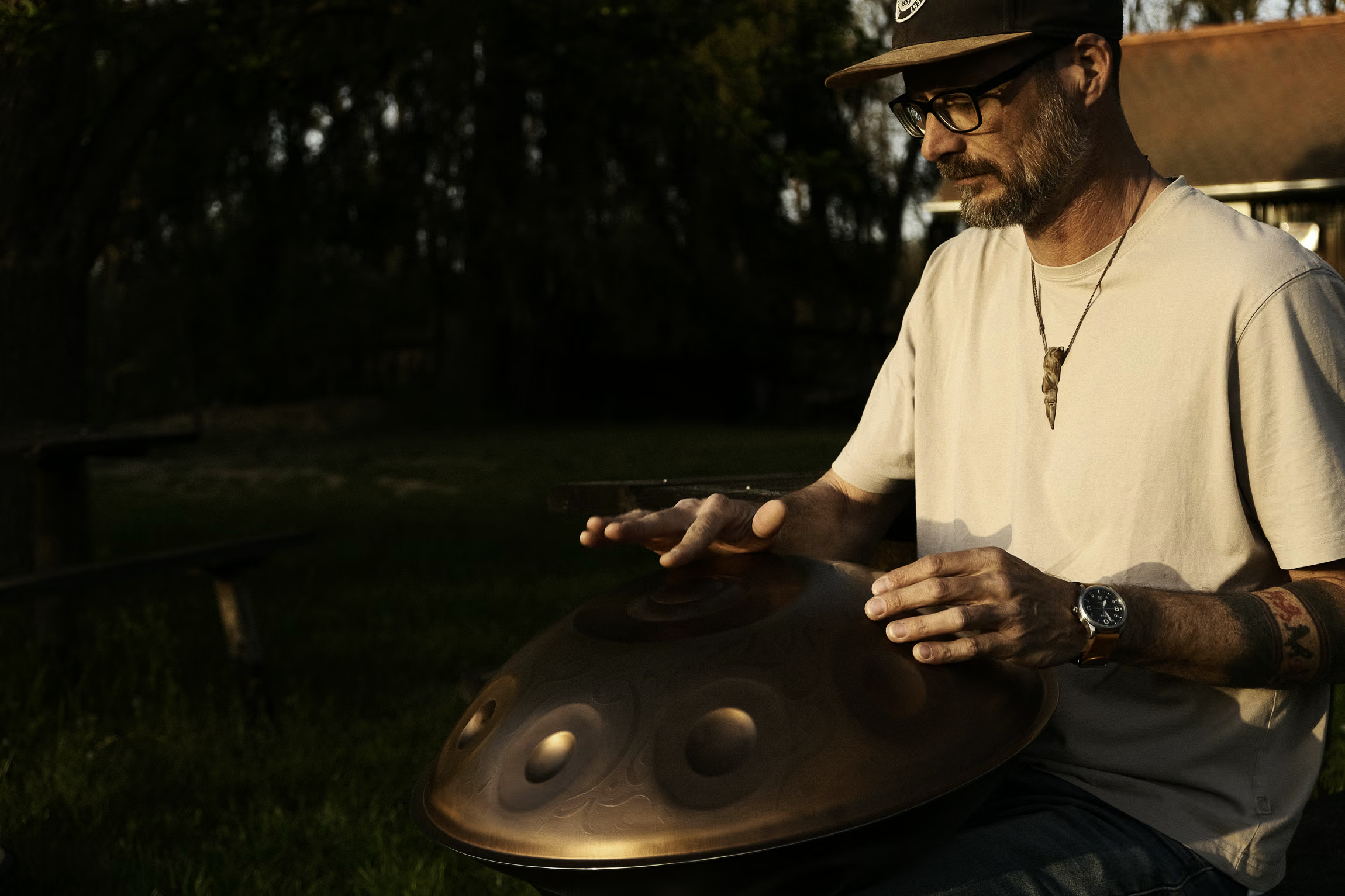
A high-quality handpan offers a natural, well-balanced tone with rich resonance.
Its sound is warmer and less metallic, performing equally well in fast, percussive playing and slower, more meditative styles.
Notes sustain evenly, neither too short nor overly long, and maintain quality across the instrument, with little to no crosstalk so each field remains clearly defined.
A high-quality handpan should respond well across a broad dynamic range, from gentle touches to more energetic playing, without requiring excessive force.
You can fully control volume and intensity by how you play, allowing for highly dynamic expression.
One sign of a high-quality handpan is that it passes every sensory test: it feels good to touch, sounds wonderful, and is enjoyable to play from the very first moment.
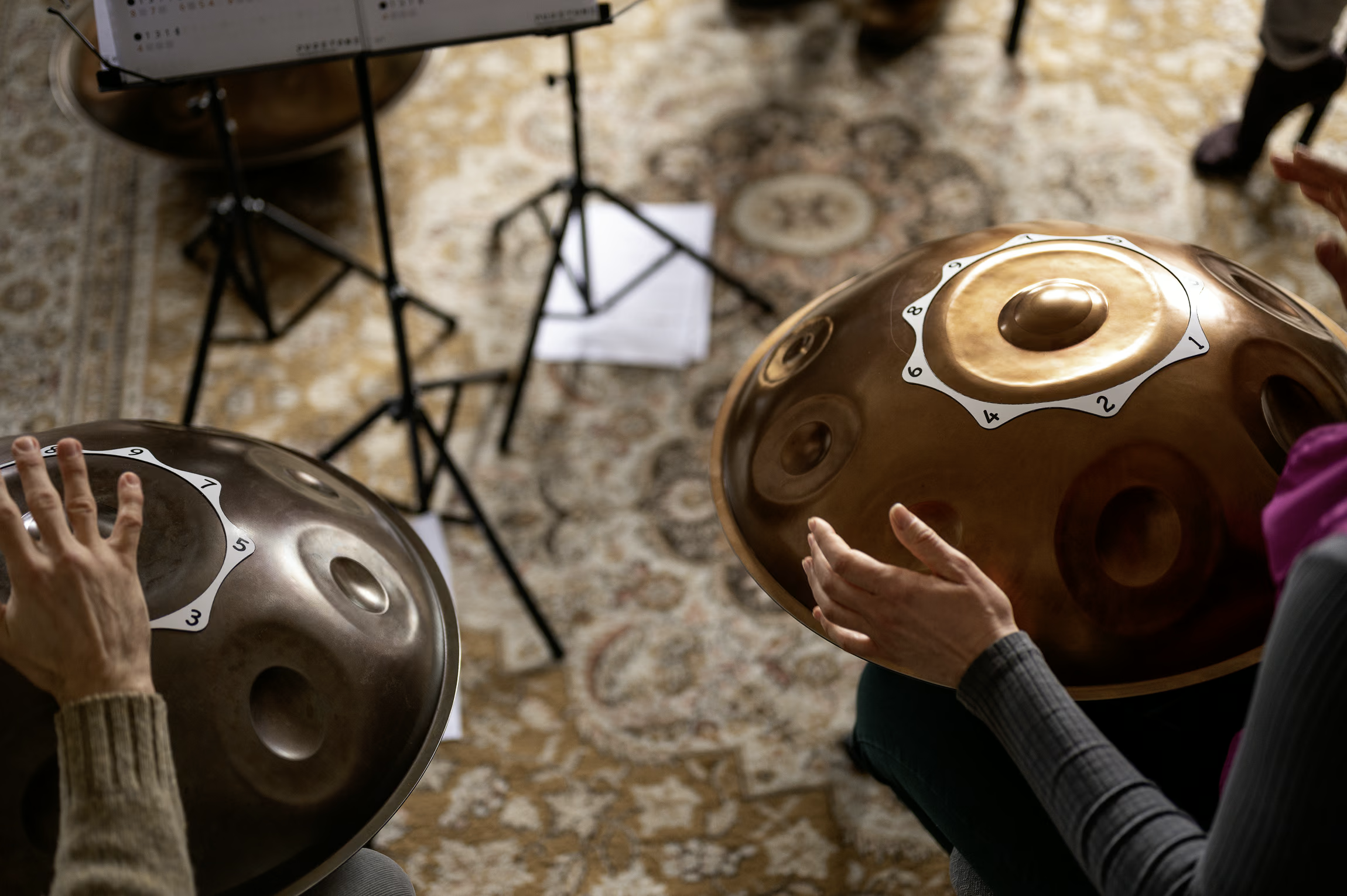
Behind a high-quality handpan are years of accumulated experience, acoustic experimentation and a detailed understanding of how material, shaping and tuning interact. Producing the instrument itself then requires precise forming, tuning and stability work.
Here is what professional makers do behind the scenes to create a high-quality instrument:
A flawless scale isn't just about hitting the right pitch; it’s about acoustic architecture.
Master makers spend years experimenting with layouts to ensure every single note is perfectly sized, its tuning axis faces the optimal direction, and it is paired with the exact right dimple size. This prevents clashing frequencies and creates a truly harmonious instrument.
In high-quality instruments, precise shaping helps control how vibrations travel across the shell.
The areas between tonefields also play an important role in how vibrations travel through the shell. Precise shaping helps control the interaction between neighbouring notes, reducing unwanted crosstalk while preserving a musical and coherent resonance across the instrument.
Many high-quality handpans are designed for exceptional long-term stability. MAG Instruments even backs this quality with a lifetime tuning warranty, while lower-cost instruments may vary significantly depending on manufacturing quality.
The tuning stability is largely the result of highly consistent heat treatment (annealing) combined with rigorous stability checks. By baking the steel at precise temperatures, the internal mechanical stresses caused by shaping are released.
In MAG’s experience, high-quality material and an experienced tuner can reduce the number of heat-treatment cycles required to achieve long-term stability.
This locks the tuning in place, ensuring the metal "remembers" its exact shape.

High-quality handpans should come from people or organisations that genuinely specialise in making and tuning these instruments.
This may be an independent artisan producing a small number of highly personal instruments, or a larger specialised workshop in which skilled craftspeople and tuners follow structured processes.
The scale of production is less important than the quality of the work, the consistency of the result and the level of responsibility taken by the manufacturer.
Even when tools, presses or standardised procedures are used, each handpan still requires precise acoustic work and individual tuning.
“Handmade” and “produced at scale” are not always opposites.
After-purchase care is a key factor when it comes to high-quality makers. They often provide a warranty for their instruments’ tuning with free retuning services for several years. In some cases, the warranty can also be lifelong.
Of course, there are differences between manufacturers. Each company has its own technique, tuning method, tools, and choice of materials.
Mass-produced handpans sold through generic marketplaces often show inconsistent quality and limited after-sales support. Beyond shipping the product, there is seldom anything else, maybe a basic written guide for most of these products.
There is no professional advice on instrument selection or maintenance, no retuning service, and replacing or returning the instrument is usually lengthy and complicated, if possible at all.
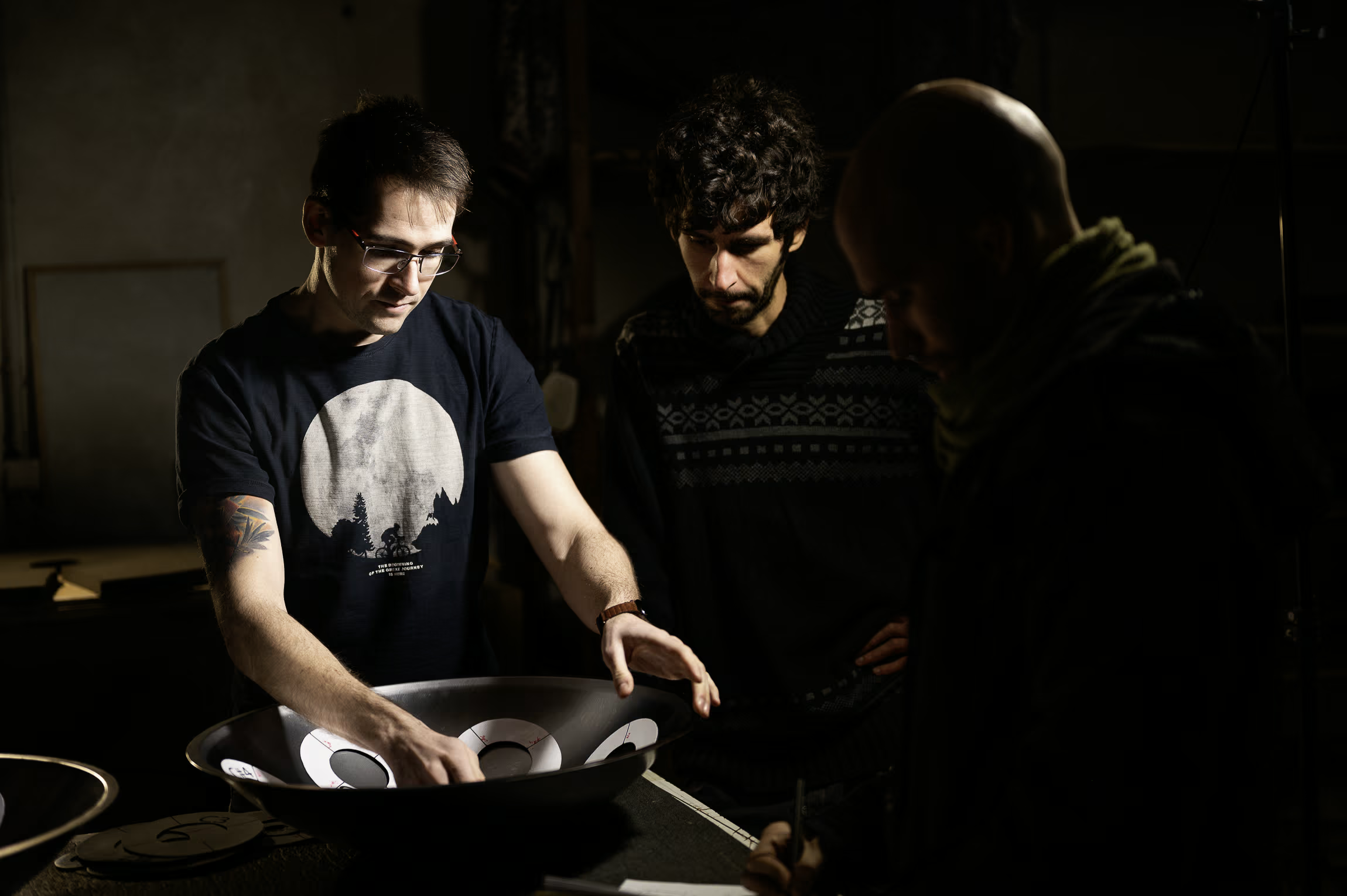
A high-quality handpan should come from a knowledgeable maker, specialised workshop or brand that is transparent about how its instruments are made and tuned. Who makes and tunes their instruments? What experience do they have? How transparent are they about their production and quality-control process?
Before deciding on a maker, research their background online.
Check out their website. Read their About page. Check whether you can find professional information and how detailed it is. Maybe they also maintain a blog.
Check their social media presence and read through their posts. You can learn a lot about their expertise and reliability this way.
Read reviews about them on Google, Facebook, Reddit, and other independent forums or sites. You can also check if they show customer feedback on their own website, or for example through independent review platforms.
Experience and track record are useful indicators, but a newer maker or brand should not be dismissed automatically.
Look for evidence:
A long history can inspire confidence, but demonstrated competence and accountability matter more than age alone.
Look for various contact options (email, phone, or on social media), ask for information or advice, and see if they actually respond on those channels.
Check on their website if they offer pre-purchase advice, aftercare support, and solid guarantees. Ask them if you cannot find enough information. But keep in mind if there is absolutely nothing about warranty and support on their website, it is a red flag.
(MAG Instruments, for example, stands behind their craftsmanship with a lifetime warranty, as they believe a high-quality handpan should be a companion for life.)
It can also be useful to see whether experienced or professional players use the maker’s instruments. This can provide an additional indication of their reputation, although it should be considered alongside sound quality, customer feedback, transparency, warranty and after-sales support.
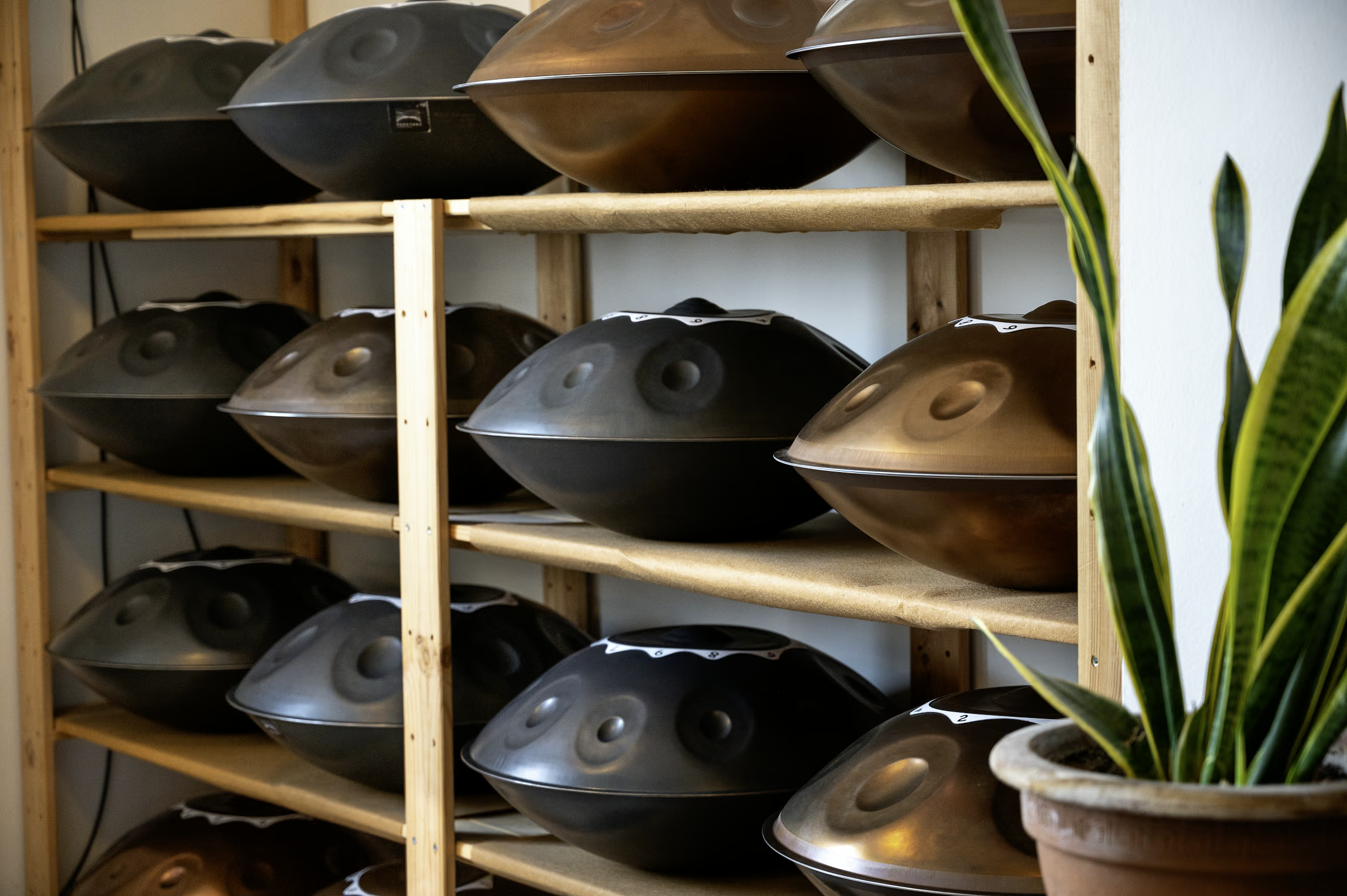
The price of a handpan can be influenced by many factors, including the number and complexity of the tonefields, materials, production method, level of customisation, labour costs, distribution model, quality control and after-sales service.
Additional tonefields generally increase the complexity and time required for tuning, which can contribute to a higher price.
Quality over quantity is the golden rule. If your budget is limited, prioritising tuning quality and overall craftsmanship over the number of notes is usually the better choice.
This way you will get a clearer, more beautiful sound that you can truly enjoy.
If you are buying a used handpan, always insist on testing it in person or ask the seller for a video where they play each note separately.
Be aware that some resellers offer low-quality mass-produced instruments at inflated prices. Watch for the same warning signs you would when buying a new instrument.
When buying online, the safest route is to choose a reputable maker, specialised workshop or brand that provides:
For standardised models produced by an established specialised workshop or brand with consistent quality-control procedures, a high-quality and representative demonstration of the model may be sufficient. In this case, transparency, consistency, warranty and after-sales support become particularly important.
The product page should provide enough detailed information to understand exactly what you are buying. If anything remains unclear, the maker or seller should be able to provide additional information before purchase.
When buying second-hand or through a third-party reseller, make sure the instrument genuinely corresponds to the maker and model stated in the listing.
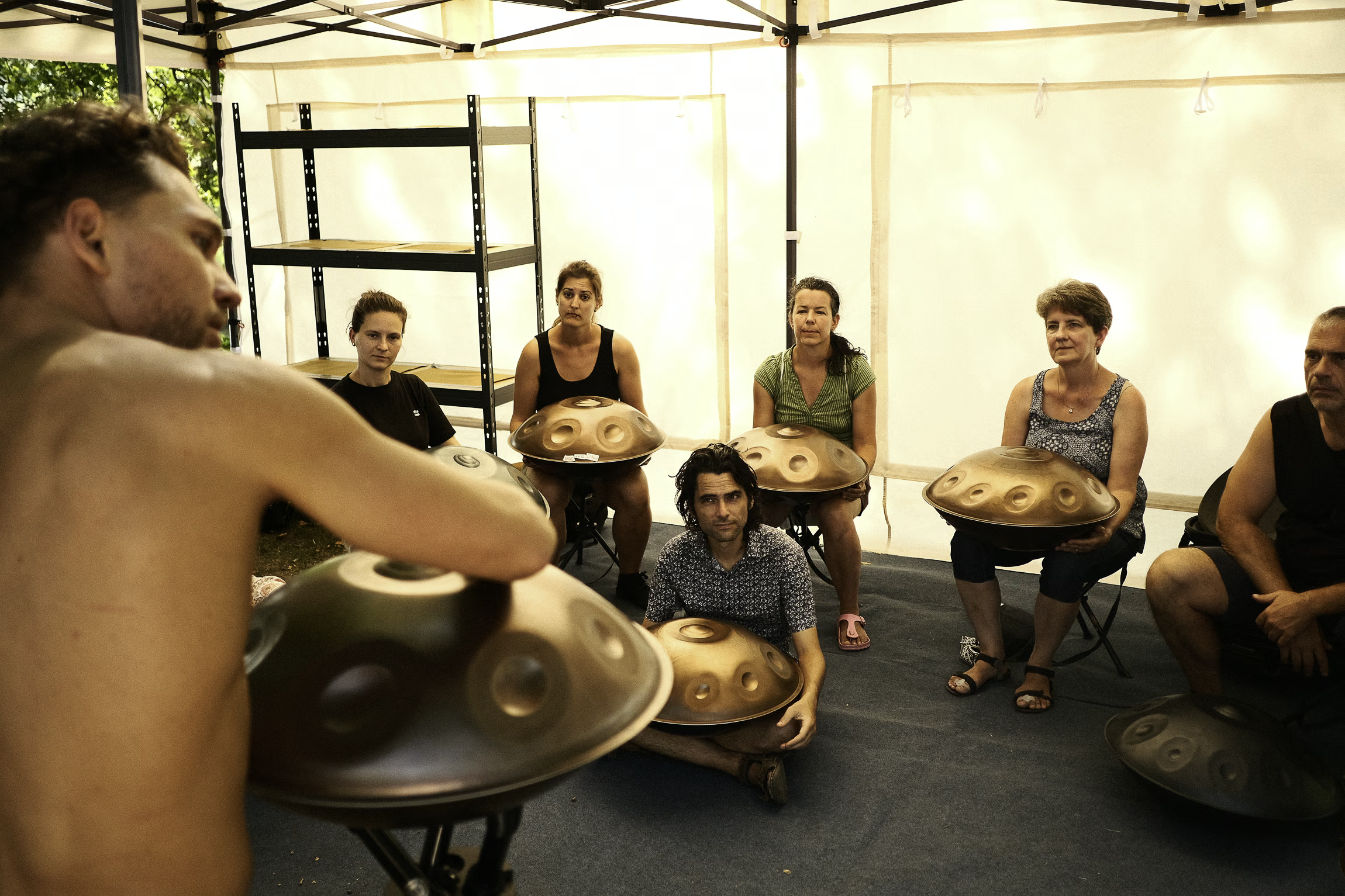
To choose the best high-quality handpan for you, make sure to take your time and conduct thorough research. Watch and request videos, read product descriptions, and learn about the manufacturer through their website and social media channels.
Key selection criteria include tuning, sound quality, and the reliability of the maker.
High-quality instruments produce a clear, balanced, and natural tone, maintain stable tuning, and ensure that each note field is well-defined and distinct.
Excellent handpans can emerge from different production models.
Some players will value the personal relationship, customisation and individuality offered by an independent artisan. Others may prefer the availability, standardisation and price accessibility offered by a specialised workshop.
What should never change is the standard expected from the instrument:
Do not choose a handpan solely because of its price, origin, production volume or marketing.
Listen carefully. Investigate who stands behind it. Understand what you are paying for.
Then choose the instrument that gives you confidence and inspires you to play for many years to come.

Choosing a handpan is rarely a purely technical decision.
Sound, feel, scale, budget, availability and the relationship you build with the instrument all matter.
A handpan can accompany you for many years. Through practice, performances and personal moments, it often becomes much more than an object. This is why it is worth understanding what you are buying, and what genuinely contributes to its quality.
This is exactly why, while taking practical aspects into account, it really does matter which instrument you choose. The goal is for your handpan to bring joy and inspire your music making for many years to come.
To help you with this, here are some practical considerations that can guide you in finding your ideal instrument.
This article was developed by MasterTheHandpan in conversation with our friends at MAG Instruments, who shared their experience of high-quality artisan handpan making.
We have also broadened the discussion to reflect the diversity of today’s handpan market, from independent makers to specialised workshops and larger-scale production models.
Today’s handpan market includes several very different production models.
Some instruments are made individually or in very small batches by independent artisans. Others are produced by specialised workshops with teams of experienced craftspeople and tuners, standardised models and structured quality-control procedures.
At the other end of the market, anonymous instruments may be sold through generic marketplaces with little information about their origin, tuning process or after-sales support.
These production models should not automatically be confused with quality levels.
A small independent maker can produce an exceptional instrument, but so can a well-organised specialist workshop. Conversely, neither a high price, a particular country of origin nor the word “handmade” guarantees a great result.
The instrument should ultimately be judged by its sound, stability, responsiveness, consistency, construction and the responsibility taken by the company behind it.
A high-quality handpan should combine exceptional musical quality with a reliable experience before and after the purchase.
Important factors include:
Players who begin with an anonymous low-cost instrument are sometimes surprised when they later try a professionally tuned handpan.
Differences in responsiveness, balance, sustain, tuning stability and note definition can be substantial.
However, price and production volume alone do not determine quality.
A lower price may result from standardised scales, fewer custom options, larger production runs, direct distribution or a more efficient supply chain. It may also result from compromises in materials, tuning time, stability work, quality control or after-sales support.
These are very different situations.
The important question is not simply, “Is this instrument inexpensive?” but rather, “How has this price been achieved, and what standards remain behind it?”
Making a good handpan requires acoustic knowledge, precision, appropriate materials, skilled tuning and careful stability work.
These qualities may exist within the practice of an individual artisan or within a specialised team.
What matters is that the people responsible for each stage understand how shaping, heat treatment, note geometry and tuning interact, and that the finished instrument is assessed carefully before being sold.
A high-quality handpan should offer a clear, balanced and expressive sound across different playing styles, from fast and percussive patterns to slower, more meditative playing. A responsive and well-balanced instrument makes it easier for the player to control dynamics, explore musical ideas and become fully immersed in the playing experience.
Perhaps the most important aspect of choosing a handpan is the tuning. This defines the sound and stability of the instrument and with it, the joy and the experience of playing.
If tuned well, the handpan will have a clear and balanced sound. With proper care and normal playing, a well-tuned and properly stabilised handpan can remain in tune for many years.
Tuning quality can vary greatly across every price category, although the risks are generally higher when the manufacturer, tuning process and quality-control standards are unknown.
Some low-cost instruments sold through generic marketplaces present unstable notes, excessive crosstalk, unclear harmonics or inconsistent sustain.
However, price alone is not enough to diagnose an instrument. Each handpan should be assessed by how it actually sounds, responds and performs.
When a handpan goes out of tune its sound becomes false and unpleasant. A poorly tuned handpan can also have noticeable crosstalk, unclear tones, and poor sustain.
Even the highest quality handpans can need retuning at intervals (very intense playing can shorten the tuning’s lifespan, which is natural).
Retuning is a specialised process that requires experience and expertise. A well-tuned handpan can remain in tune for many years, as long as it is used as intended and not dropped.
The cost of retuning depends on the maker, typically between 100–250 euros. Usually, makers offer lower prices for retuning their own instruments, and may charge extra for those made by others.
A high-quality handpan offers a natural, well-balanced tone with rich resonance.
Its sound is warmer and less metallic, performing equally well in fast, percussive playing and slower, more meditative styles.
Notes sustain evenly, neither too short nor overly long, and maintain quality across the instrument, with little to no crosstalk so each field remains clearly defined.
A high-quality handpan should respond well across a broad dynamic range, from gentle touches to more energetic playing, without requiring excessive force.
You can fully control volume and intensity by how you play, allowing for highly dynamic expression.
One sign of a high-quality handpan is that it passes every sensory test: it feels good to touch, sounds wonderful, and is enjoyable to play from the very first moment.
Behind a high-quality handpan are years of accumulated experience, acoustic experimentation and a detailed understanding of how material, shaping and tuning interact. Producing the instrument itself then requires precise forming, tuning and stability work.
Here is what professional makers do behind the scenes to create a high-quality instrument:
A flawless scale isn't just about hitting the right pitch; it’s about acoustic architecture.
Master makers spend years experimenting with layouts to ensure every single note is perfectly sized, its tuning axis faces the optimal direction, and it is paired with the exact right dimple size. This prevents clashing frequencies and creates a truly harmonious instrument.
In high-quality instruments, precise shaping helps control how vibrations travel across the shell.
The areas between tonefields also play an important role in how vibrations travel through the shell. Precise shaping helps control the interaction between neighbouring notes, reducing unwanted crosstalk while preserving a musical and coherent resonance across the instrument.
Many high-quality handpans are designed for exceptional long-term stability. MAG Instruments even backs this quality with a lifetime tuning warranty, while lower-cost instruments may vary significantly depending on manufacturing quality.
The tuning stability is largely the result of highly consistent heat treatment (annealing) combined with rigorous stability checks. By baking the steel at precise temperatures, the internal mechanical stresses caused by shaping are released.
In MAG’s experience, high-quality material and an experienced tuner can reduce the number of heat-treatment cycles required to achieve long-term stability.
This locks the tuning in place, ensuring the metal "remembers" its exact shape.
High-quality handpans should come from people or organisations that genuinely specialise in making and tuning these instruments.
This may be an independent artisan producing a small number of highly personal instruments, or a larger specialised workshop in which skilled craftspeople and tuners follow structured processes.
The scale of production is less important than the quality of the work, the consistency of the result and the level of responsibility taken by the manufacturer.
Even when tools, presses or standardised procedures are used, each handpan still requires precise acoustic work and individual tuning.
“Handmade” and “produced at scale” are not always opposites.
After-purchase care is a key factor when it comes to high-quality makers. They often provide a warranty for their instruments’ tuning with free retuning services for several years. In some cases, the warranty can also be lifelong.
Of course, there are differences between manufacturers. Each company has its own technique, tuning method, tools, and choice of materials.
Mass-produced handpans sold through generic marketplaces often show inconsistent quality and limited after-sales support. Beyond shipping the product, there is seldom anything else, maybe a basic written guide for most of these products.
There is no professional advice on instrument selection or maintenance, no retuning service, and replacing or returning the instrument is usually lengthy and complicated, if possible at all.
A high-quality handpan should come from a knowledgeable maker, specialised workshop or brand that is transparent about how its instruments are made and tuned. Who makes and tunes their instruments? What experience do they have? How transparent are they about their production and quality-control process?
Before deciding on a maker, research their background online.
Check out their website. Read their About page. Check whether you can find professional information and how detailed it is. Maybe they also maintain a blog.
Check their social media presence and read through their posts. You can learn a lot about their expertise and reliability this way.
Read reviews about them on Google, Facebook, Reddit, and other independent forums or sites. You can also check if they show customer feedback on their own website, or for example through independent review platforms.
Experience and track record are useful indicators, but a newer maker or brand should not be dismissed automatically.
Look for evidence:
A long history can inspire confidence, but demonstrated competence and accountability matter more than age alone.
Look for various contact options (email, phone, or on social media), ask for information or advice, and see if they actually respond on those channels.
Check on their website if they offer pre-purchase advice, aftercare support, and solid guarantees. Ask them if you cannot find enough information. But keep in mind if there is absolutely nothing about warranty and support on their website, it is a red flag.
(MAG Instruments, for example, stands behind their craftsmanship with a lifetime warranty, as they believe a high-quality handpan should be a companion for life.)
It can also be useful to see whether experienced or professional players use the maker’s instruments. This can provide an additional indication of their reputation, although it should be considered alongside sound quality, customer feedback, transparency, warranty and after-sales support.
The price of a handpan can be influenced by many factors, including the number and complexity of the tonefields, materials, production method, level of customisation, labour costs, distribution model, quality control and after-sales service.
Additional tonefields generally increase the complexity and time required for tuning, which can contribute to a higher price.
Quality over quantity is the golden rule. If your budget is limited, prioritising tuning quality and overall craftsmanship over the number of notes is usually the better choice.
This way you will get a clearer, more beautiful sound that you can truly enjoy.
If you are buying a used handpan, always insist on testing it in person or ask the seller for a video where they play each note separately.
Be aware that some resellers offer low-quality mass-produced instruments at inflated prices. Watch for the same warning signs you would when buying a new instrument.
When buying online, the safest route is to choose a reputable maker, specialised workshop or brand that provides:
For standardised models produced by an established specialised workshop or brand with consistent quality-control procedures, a high-quality and representative demonstration of the model may be sufficient. In this case, transparency, consistency, warranty and after-sales support become particularly important.
The product page should provide enough detailed information to understand exactly what you are buying. If anything remains unclear, the maker or seller should be able to provide additional information before purchase.
When buying second-hand or through a third-party reseller, make sure the instrument genuinely corresponds to the maker and model stated in the listing.
To choose the best high-quality handpan for you, make sure to take your time and conduct thorough research. Watch and request videos, read product descriptions, and learn about the manufacturer through their website and social media channels.
Key selection criteria include tuning, sound quality, and the reliability of the maker.
High-quality instruments produce a clear, balanced, and natural tone, maintain stable tuning, and ensure that each note field is well-defined and distinct.
Excellent handpans can emerge from different production models.
Some players will value the personal relationship, customisation and individuality offered by an independent artisan. Others may prefer the availability, standardisation and price accessibility offered by a specialised workshop.
What should never change is the standard expected from the instrument:
Do not choose a handpan solely because of its price, origin, production volume or marketing.
Listen carefully. Investigate who stands behind it. Understand what you are paying for.
Then choose the instrument that gives you confidence and inspires you to play for many years to come.